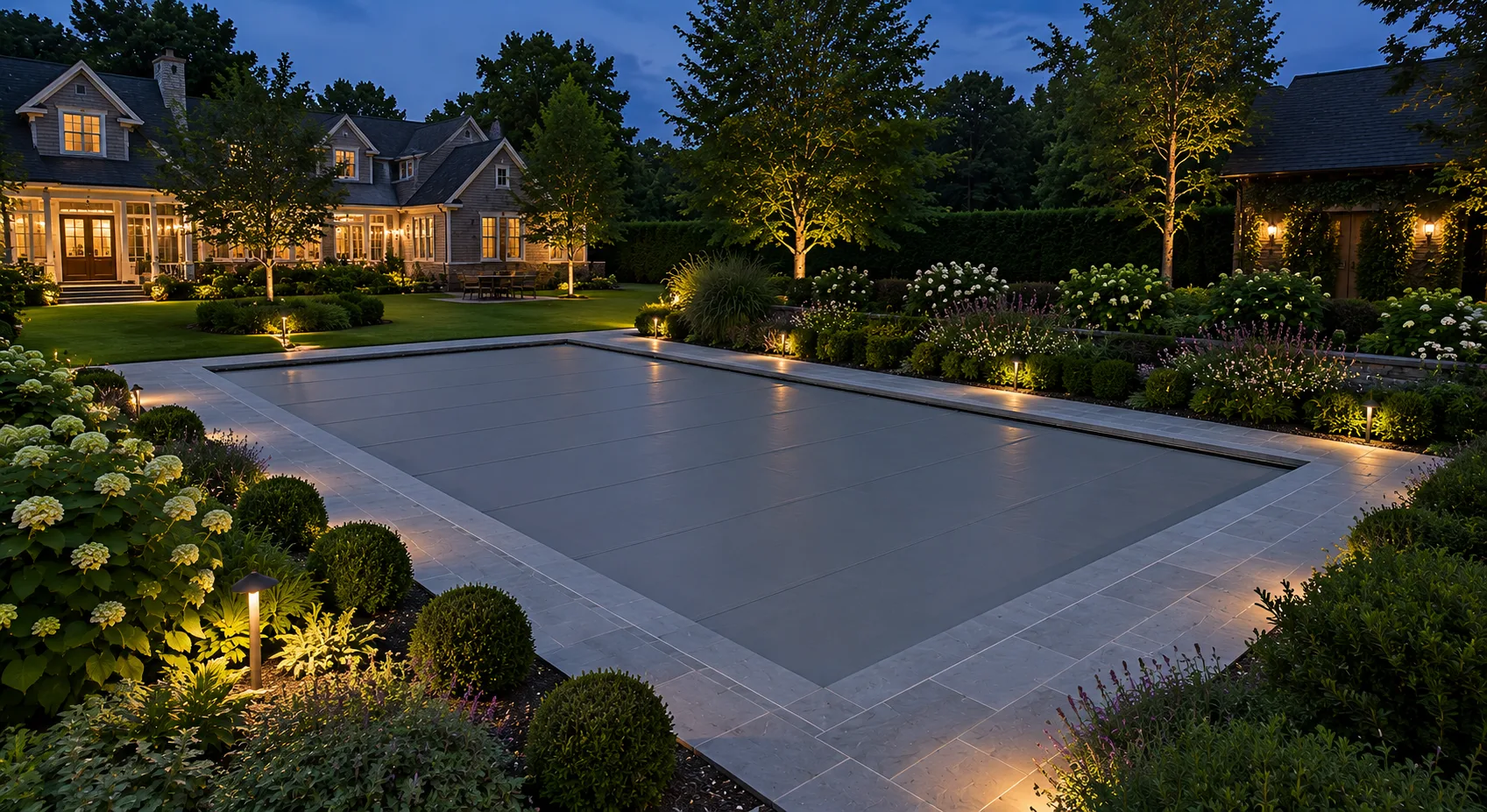
Estate pool closed for the season at winter dusk, house lit warm behind, on a Gedney Pools property
GEDNEY POOLS
DARIEN, CONNECTICUT
CUSTOM GUNITE SPA INSTALLATION
The Winter Pool

Engineering a Custom Gunite Spa for the Connecticut Cold

FOURTH-GENERATION POOL BUILDERS. DARIEN, CONNECTICUT.

GEDNEY POOLS
02 / 13
THE DISTINCTION

Appliance, or Architecture

THE PORTABLE TUB
Bought from a floor model, delivered on a trailer, parked on a pad.

A molded shell in a cabinet, sized by the catalog, replaced when it fails. It sits on the property. It never belongs to it.

THE BUILT SPA
Designed for the site, engineered like the house, built from reinforced concrete and stone.

A permanent masonry structure, shaped to the architecture, finished in the same stone as the terrace. It is part of the property, and it appreciates with it.

In Connecticut, the built spa is also the one piece of the outdoor property still running when the terrace is under snow.

GEDNEY POOLS
03 / 13
THE TYPOLOGIES

Four Ways to Build a Spa

SPA ABOVE, POOL BELOW, SHARED WALL

The spillover

Elevated beside the pool, water cascading over the shared wall. One set of equipment, two modes, switched by valve actuators. The most requested form.

2 TO 4 FT WALL, STONE OR TILE CLAD

The raised feature spa

Two to four feet above pool level behind a stone or tile clad wall. A wider sheet of falling water, or multiple streams.

OWN PUMP, FILTER, HEATER

The standalone

A fully independent mechanical system, positioned for views, privacy, or proximity to the house. No pool required.

BENCH AND JETS AT POOL LEVEL

The in-pool spa zone

Bench seating and jets within the pool itself. On a covered pool, the usual choice since automatic covers matured: the spa shares the cover and closes with the pool. It cannot hold a separate temperature.

GEDNEY POOLS
04 / 13
THE MOST REQUESTED FORM

The Spillover

SECTION THROUGH SPA AND POOL SPA AT 104 DEGREES THE CASCADE POOL AT POOL TEMPERATURE THE SHARED WALL SHARED PLUMBING RUNS VALVE ACTUATORS
Elevation

The spa rises beside the pool, giving the composition a second level and the bather a view over the water.

The cascade

Water falls over the shared wall in a continuous sheet: the sound of the property, running whenever the spa runs.

Two modes, one machine room

In pool mode the spa runs at pool temperature, overflowing back to the pool. Tap spa mode and valve actuators redirect suction and return to the spa alone: 104 degrees in roughly 15 minutes.

With an automatic cover

A raised spa cannot spill onto a closed pool cover, so the cascade runs on its own pump, interlocked with the cover position. On covered pools, many owners set the spa inside the pool instead, sharing one cover.

GEDNEY POOLS
05 / 13
ENGINEERING FIRST

Drawn Before It Is Built

GEDNEY POOLS DESIGN STUDIOSECTION THROUGH A RAISED SPAGRADESPA WATER, HALFWAY UP THE TILE6 IN TILE UNDERTHE COPINGPOOL WATER LEVELRAISED 2 TO 4 FTABOVE THE POOLTHE CASCADEREINFORCEDGUNITE SHELLSTONE COPINGBENCHSTEEL, TIED CONTINUOUSCOMPACTED BASEILLUSTRATIVE DESIGN SECTION, NOT A CONSTRUCTION DOCUMENT

Every Gedney spa exists first on paper: a stamped structural drawing with its own steel schedule, its own hydraulic design, its own bonded electrical plan.

It is permitted like every Gedney structure, and the permit package stays on file for the life of the spa.

Shown: an illustrative design section, drawn in the studio.

GEDNEY POOLS
06 / 13
HYDROTHERAPY BY DESIGN

Jets Placed by the Body, Not by the Count

SEATED PROFILE, JET ZONES WATER BACK, 3 HEIGHTS SHOULDER, PULSING CALF, BENCH FRONT FOOTWELL VENTURI AIR, DRAWN AT THE JETS

Jets are placed where a seated body actually is: back jets at multiple heights with adjustable nozzles, smaller high-pressure shoulder jets that rotate or pulse, calf jets along the bench front, foot jets in the footwell.

The air in those jets is drawn, not blown. Pumps and piping are sized so each jet pulls its own air through venturi lines at full pressure, from a discreet intake at the deck. An air blower pushing bubbles through weak jets is the shortcut taken when the hydraulics were undersized.

The measure of a spa is not how many jets. It is where they are, and whether they push water or just bubbles.

GEDNEY POOLS
07 / 13
ZONES AND CONTROL

Each Zone on Its Own Circuit

I

Independent circuits

Multiple pump circuits drive the zones separately: back jets without the footwell, the calves without the shoulders, each at its own pressure.

II

One automation system

Spa, pool, lighting, and heat run through the same automation as the rest of the property, controlled from the wall or the phone.

III

Timers and sequences

Custom sequences and schedules: the spa heating on the drive home, jets stepping down as the evening does.

The machinery is elaborate. Using it is one touch.

GEDNEY POOLS
08 / 13
THE DECEMBER PROOF
104°
in a December snowfall, under a clear black sky, steam rising off still water.
The pool gets May through September, more under an automatic cover.
The spa gets ten.

Twelve is possible, but it demands uninterrupted power through every deep freeze to keep water moving. Our counsel is calmer: soak deep into December, winterize through the coldest weeks, and reopen in late February.

GEDNEY POOLS
09 / 13
HEAT, HELD

Sized for the Coldest Day, Not the Average One

40° to 104°

We fit the largest residential heater made, not the smallest that technically works. Sized for the worst case, an early-spring opening with the water still in the forties, it never strains the rest of the year.

30-60 min

Typical heat-up from a cold start, ready in under an hour. From pool temperature in spa mode, closer to fifteen minutes. Decide at dinner, soak by dessert.

DEDICATED HEATER

The largest residential unit, dedicated to the spa. A smaller one saves little up front and spends the difference in slow heat-ups.

INSULATED RUNS

Insulated plumbing between equipment and shell, so the heat arrives where it was sent.

AUTOMATIC COVER

Holds the heat between soaks and cuts evaporation, the spa's largest heat loss.

GEDNEY POOLS
10 / 13
THE COMPOSITION

Fire, Light, Scent, Stone

Light, synchronized

Color-changing LED in the spa keyed to the pool's, so the whole water composition reads as one instrument after dark.

Fire beside water

Fire bowls or a linear flame feature set into the spa surround: two elements in one composition, at their best in the cold months.

Covered, invisibly

Recessed automatic covers for heat retention, evaporation control, and safety. On a standalone spa, essential.

Scent and stone

Integrated aromatherapy dispensers, and finishes chosen for this climate as much as for the eye: hand-painted ceramic, custom pebble, natural stone.

GEDNEY POOLS
11 / 13
THE RETROFIT

Adding a Spa to an Existing Pool

1

A spillover added to one end of the pool, on the shared-wall section.

2

A raised spa behind a new feature wall, giving the flat pool a second level.

3

A standalone spa elsewhere on the property, near the house or the view.

4

An integrated spa zone cut into the existing shell during renovation.

The economical moment is a renovation already underway: the pool is drained, the equipment is being upgraded, and the trades are on site. One mobilization instead of two.

PLAN DETAIL, SPA ADDITIONNEXISTING POOLNEW SPADOWELED TO THEEXISTING SHELLSPILLWAYEQUIPMENTNEW RUNSILLUSTRATIVE, NOT A CONSTRUCTION DOCUMENT
GEDNEY POOLS
12 / 13
HONEST NUMBERS

What a Built Spa Costs: It Depends When You Build It

WITH A POOL PROJECT UNDERWAY
A modest increment

The spa shares the excavation, the steel, the shotcrete mobilization, and the trades already on site. The machine is running; the spa joins it.

BUILT ALONE ON THE PROPERTY
Past $110,000+

A standalone spa carries the full setup of a pool project for one small structure: excavation, steel, shotcrete rig, every trade mobilized once. The setup costs are nearly the same either way.

The honest number comes from your site and your finishes, priced in a design consultation, not from a menu.
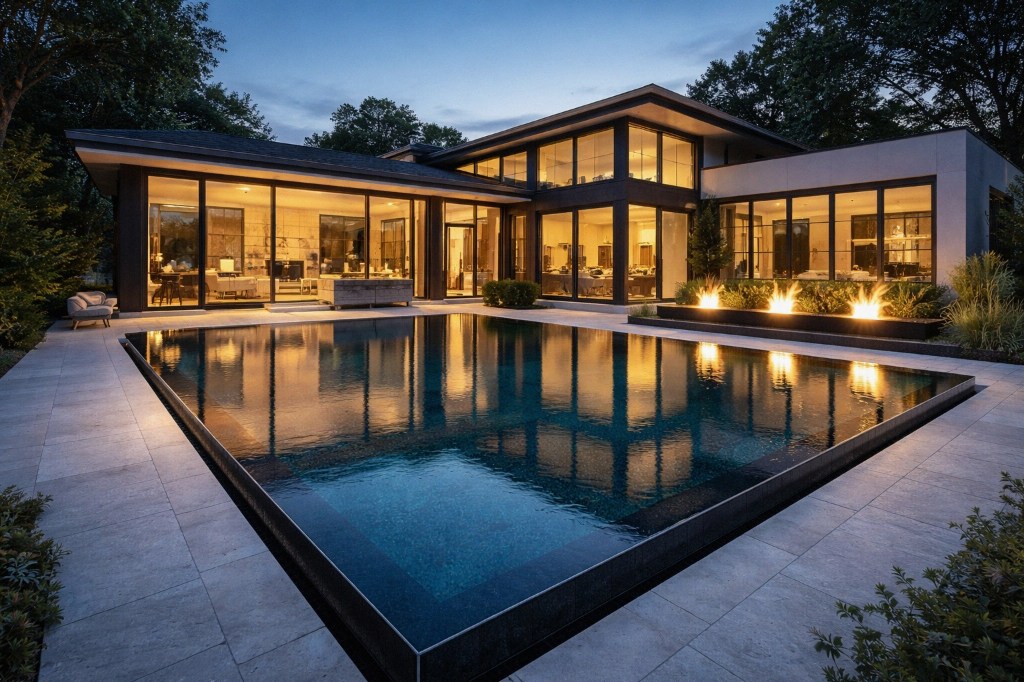
Fire and water together at dusk on a custom Gedney Pools gunite pool and spa
GEDNEY POOLS
13 / 13

The room of the house that happens to be outdoors.

Gedney Pools LLC | Darien, CT | (203) 302-9920 | CT HIC #0704131 | CT SPB #SPB.0000169

Custom Spa & Hot Tub Installation in Fairfield County

From elevated spillover spas that cascade into your pool to standalone hydrotherapy retreats, we build custom spas that extend your outdoor season year-round.

Why Build a Custom Spa Instead of Installing a Showroom Hot Tub?

There is a fundamental difference between a portable hot tub sitting on a deck and a custom-built gunite spa designed as an integral part of your outdoor living environment. A portable hot tub is an appliance. A custom spa is architecture. It is built into the landscape, finished with the same materials as your pool and hardscape, plumbed into your filtration and automation systems, and designed to look like it has always been there.

At Gedney Pools, we design and build custom spas using the same gunite construction methods we use for our pools. Reinforced concrete shell, premium interior finishes, natural stone or tile exterior, dedicated heating, and full hydrotherapy jet systems. These are permanent, substantial structures that add both value and daily enjoyment to your property.

Whether you are building a new pool with an integrated spa, adding a spa to an existing pool as part of a renovation, or creating a standalone spa retreat separate from the pool, we handle every aspect of design, engineering, permitting, and construction.

Investment Range: A simple spa zone built into the pool itself starts around $30,000 and moves up from there. Give the spa its own equipment set, a dedicated heater, separate circulation, and an automatic cover, and those systems add their full cost. Build a spa alone on the property and it carries the same setup costs as a pool project, excavation, steel, shotcrete mobilization, and every trade, which pushes a standalone custom gunite spa past $110,000+. The exact number comes from your site and your finishes, priced in a design consultation.

What Spa Types Does Gedney Pools Build?

Spillover Spa (Attached to Pool). The most popular configuration in Fairfield County luxury homes. The spa sits at an elevated level adjacent to the pool, with water cascading over a shared wall into the main pool. This creates a stunning visual and auditory effect - the gentle sound of water falling from spa to pool adds an atmospheric quality that a standalone spa cannot match. Spillover spas share some plumbing with the pool but always have independent heating so you can heat the spa to 104 degrees without warming the entire pool.

Raised Spa with Waterfall Wall. Similar to a spillover spa but with a more dramatic presentation. The spa is raised 2-4 feet above pool level with a stone or tile-clad wall, and water falls in a wider sheet or multiple streams. This architectural element creates a focal point in the pool area and provides a visual screen between the pool and adjacent spaces.

Standalone Spa. A freestanding spa unconnected to the pool, positioned for views, privacy, or proximity to the house. Standalone spas are ideal for properties where the pool area is fully developed and there is no room for an attached spa, or where the homeowner wants a spa experience separate from the pool environment. These require their own complete mechanical system - pump, filter, heater, and controls.

In-Pool Spa (Wet Spa). A spa area built into the pool itself, typically at a shallower depth with perimeter bench seating and hydrotherapy jets. The water level is the same as the pool. While simpler to construct than a raised spillover spa, in-pool spas cannot maintain a separate temperature from the pool - a significant limitation for year-round spa use in Connecticut.

How Are Hydrotherapy and Jet Configurations Designed?

A spa without proper jet design is just a small hot pool. The therapeutic value - and the daily enjoyment - comes from the hydrotherapy system. We design jet configurations based on ergonomic seating positions, targeting specific muscle groups:

  • Back jets: Positioned at various heights to target upper back, middle back, and lower back. Adjustable nozzles allow individual users to direct water pressure where they need it.
  • Neck and shoulder jets: Positioned at seated shoulder height to relieve tension. These are typically smaller, higher-pressure jets with a rotating or pulsing action.
  • Foot jets: Built into the footwell floor or opposite wall for reflexology-style hydrotherapy.
  • Calf and hamstring jets: Positioned along the bench front to target the lower legs - especially valued by athletes and golfers.
  • Air blowers: Produce a gentle, effervescent bubbling effect across the entire spa floor. Adjustable intensity creates a gentle shimmer or a vigorous boil.

We use multiple pump circuits so different jet zones can operate independently, and all jet systems are controllable through the pool automation system - adjust from your phone, set timers, or create custom hydrotherapy sequences.

Spa Features and Enhancements

  • LED lighting: Color-changing underwater LED lights create atmosphere for evening spa use. We can synchronize spa lighting with pool lighting for a unified effect.
  • Fire features: Fire bowls or linear fire features integrated into the spa surround create a dramatic contrast - fire and water - that defines luxury outdoor living. See our water and fire features.
  • Automatic covers: Recessed automatic spa covers preserve heat, reduce evaporation, and provide safety when the spa is not in use. Essential for standalone spas.
  • Aromatherapy systems: Integrated scent dispensers can infuse the spa air with eucalyptus, lavender, or other therapeutic aromatics.
  • Premium finishes: Glass tile, hand-painted ceramic tile, pebble finishes in custom colors - the interior finish of your spa sets the visual tone for the entire experience.

Can You Use a Spa Year-Round in Connecticut?

Unlike pools, which have a seasonal window in Connecticut (typically May through September), a properly built spa is a year-round amenity. With a dedicated high-efficiency heater, insulated plumbing, and an automatic cover, your spa maintains temperature through the coldest Connecticut winters. There are few experiences more restorative than sitting in a 104-degree spa surrounded by a January snowfall on a clear night.

For year-round use, we recommend standalone or spillover spas with independent heating (not in-pool spas that share pool water temperature). We size heaters to handle the worst-case temperature differential - heating a spa from 40 degrees to 104 degrees on the coldest day of the year - so you never wait more than an hour for your spa to be ready.

Can You Add a Spa to an Existing Pool?

If you have an existing gunite pool and want to add a spa, renovation is the ideal time. We can:

  • Build an elevated spillover spa attached to one end of the existing pool
  • Construct a raised spa with a stone or tile feature wall
  • Build a standalone spa in a separate area of the yard
  • Modify the existing pool shell to create an integrated spa zone

Adding a spa during a pool renovation is more cost-effective than doing it as a standalone project because the pool is already drained, equipment is already being upgraded, and trades are already mobilized on-site.

Frequently Asked Questions

Spa Installation FAQ

It depends on how the spa is built. A simple spa zone built into the pool itself starts around $30,000 and moves up from there. A spa with its own equipment set, a dedicated heater, separate circulation, and an automatic cover, adds the full cost of those systems. A spa built alone on the property carries the same setup costs as a pool project, excavation, steel, shotcrete mobilization, and every trade mobilized for one small structure, which pushes a standalone custom gunite spa past $110,000+. Extensive stonework, special tile, fire features, and premium finishes move the number further. These are permanently constructed masonry spas - not prefabricated portable hot tubs.

A spillover spa is attached to and elevated above the main pool. Water cascades over a shared wall from the spa into the pool, creating a visual and auditory water feature. A standalone spa is a separate structure, independent from the pool, with its own circulation and heating systems. Both are built with the same gunite construction methods.

Yes. Adding a spillover spa to an existing gunite pool is one of the most popular renovation upgrades. It requires structural modification to the pool shell, new plumbing, an independent heater, and additional equipment. We handle this as part of our pool renovation services and can integrate the new spa seamlessly with the existing pool's design and systems.

A properly sized heater brings a custom spa from ambient to 102-104 degrees in 30-60 minutes, depending on volume and starting temperature. Automation lets you pre-heat on a schedule or trigger from your phone. We always install dedicated spa heaters independent of the pool heater for exactly this reason.

Custom-built gunite spas actually require less maintenance than portable hot tubs because they are tied into the pool's filtration and chemical management systems. The water is constantly filtered and chemically balanced. You do not need to drain and refill a built-in spa every 3-4 months the way you do with a portable unit. With chemical automation, maintenance is essentially hands-free.

Design Your Custom Spa

Contact us to discuss spa options for your property. Free consultation for all spa and pool projects throughout Fairfield and Westchester County.

(203) 302-9920
Email Us